
Research & Education
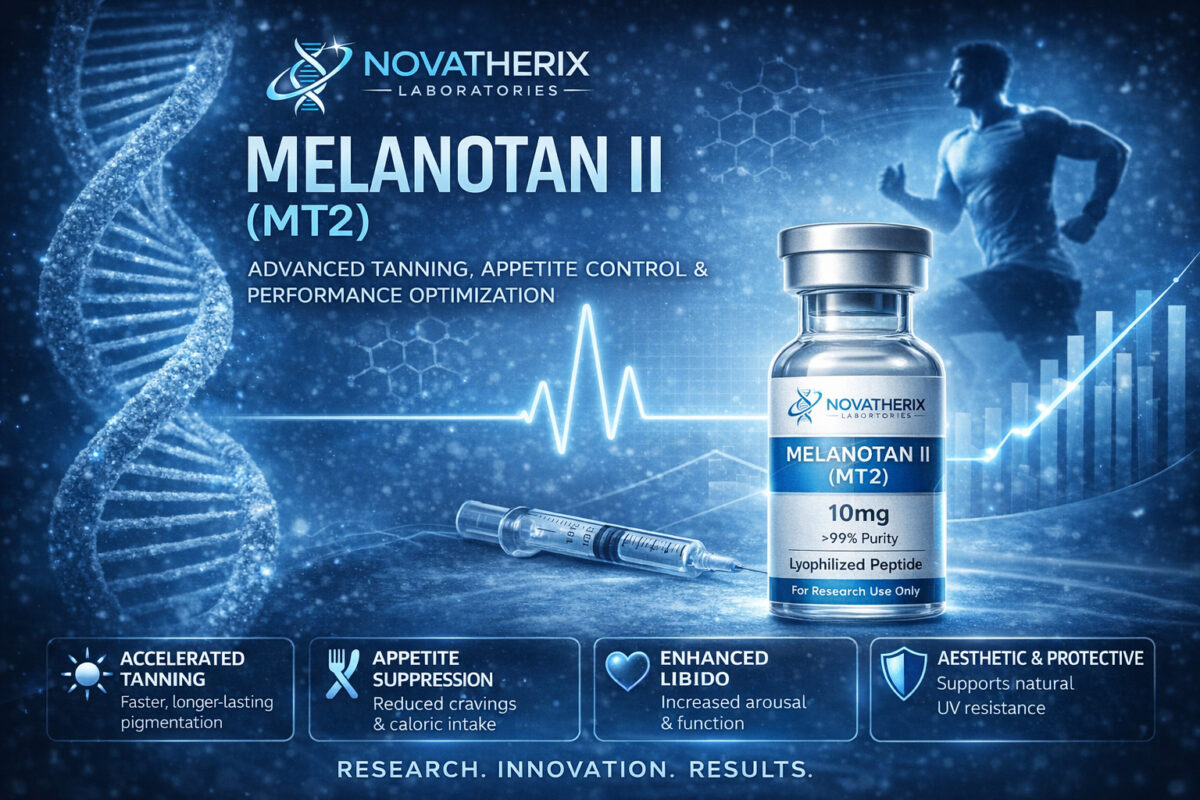
Melanotan II (MT2): A Comprehensive Overview of Tanning, Appetite Control, and Performance Potential
Mar
Introduction
In the evolving landscape of performance and aesthetic research, few compounds generate as much intrigue as Melanotan II (MT2). Known for its ability to enhance skin pigmentation while influencing appetite and libido, MT2 represents a unique intersection of cosmetic enhancement and physiological modulation.
Originally investigated for photoprotection and pigmentation disorders, MT2 has since expanded into broader research interest due to its systemic effects on the melanocortin system. [1][2]
What Is Melanotan II (MT2)?
Melanotan II is a synthetic analog of alpha-melanocyte-stimulating hormone (α-MSH), a naturally occurring peptide involved in:
- Skin pigmentation
- Appetite signaling
- Sexual function
It was developed through research into melanocortin pathways and their role in human physiology. [1]
How MT2 Works
MT2 binds to melanocortin receptors (MC1R–MC5R), producing multiple downstream effects:
- MC1R Activation → Increased melanin production
- MC3R & MC4R Activation → Appetite suppression and energy balance
- MC4R & MC5R Activation → Libido and sexual function modulation
These receptors are widely distributed throughout the body, explaining MT2’s diverse effects. [2][3]
Key Benefits
Accelerated and Enhanced Tanning
MT2 stimulates eumelanin production, leading to:
- Faster tanning with reduced UV exposure
- Deeper, longer-lasting pigmentation
- Potential reduction in UV sensitivity
Clinical investigations have shown melanocortin analogs increase pigmentation and may provide photoprotective effects. [4]
Appetite Regulation
Activation of MC3R and MC4R pathways has been associated with:
- Reduced caloric intake
- Appetite suppression
- Energy balance regulation
These pathways are well-established in metabolic research. [3][5]
Libido Enhancement
MT2 has demonstrated effects on sexual arousal through central nervous system pathways:
- Increased libido
- Spontaneous arousal responses
- Neurological melanocortin activation
These effects have been studied in clinical trials involving melanocortin receptor agonists. [6]
Aesthetic Synergy
Improved skin tone enhances visual outcomes related to:
- Muscle definition
- Body composition
- Overall physique presentation
This is largely a secondary effect of increased melanin and contrast.
Suggested Research Protocol
Initial Phase (Days 1–7):
- ~250–300 mcg daily
Titration Phase:
- Increase to ~500 mcg if tolerated
Maintenance Phase:
- Reduce frequency after desired pigmentation
Sun Exposure Guidance:
- Short, consistent exposure
- Avoid excessive UV damage
Note: Protocols are derived from anecdotal research practices and are not standardized clinical guidelines.
Expected Timeline
Days 1–5:
- Flushing
- Mild nausea
- Appetite suppression
Week 2+:
- Visible pigmentation changes
- Enhanced tanning response
- Libido effects
Potential Considerations
Reported effects in literature and user reports include:
- Flushing (vasodilation response)
- Nausea (dose-dependent)
- Darkening of freckles or moles
- Occasional fatigue
These effects are consistent with melanocortin receptor activation. [2][6]
Best Practices for Optimal Results
- Start with conservative dosing
- Increase gradually based on tolerance
- Administer in the evening if needed
- Maintain hydration
- Use controlled UV exposure
Why MT2 Stands Out
MT2 offers a multi-dimensional profile:
- Visual → Enhanced pigmentation
- Behavioral → Appetite modulation
- Physiological → Hormonal and neurological interaction
Few compounds influence this many pathways simultaneously.
Final Thoughts
Melanotan II continues to gain traction due to its ability to produce visible and systemic effects. While still considered a research compound, its growing body of literature and real-world application make it a notable subject in both aesthetic and metabolic research domains.
References
[1] Hadley ME, Dorr RT. Melanocortin peptide therapeutics: historical milestones, clinical studies and commercialization. Peptides. 2006.
→ Foundational overview of melanocortin peptides and development of MT analogs.
[2] Hruby VJ et al. Melanocortin receptor ligands and physiological roles. Annals of the New York Academy of Sciences.
→ Details receptor interactions (MC1R–MC5R) and systemic effects.
[3] Cone RD. The melanocortin receptors: agonists, antagonists, and physiology. Endocrine Reviews.
→ Explains appetite regulation and energy balance via MC3R/MC4R.
[4] Dorr RT et al. Effects of melanotan-II on human skin pigmentation. Journal of Investigative Dermatology.
→ Clinical evidence of increased pigmentation and tanning response.
[5] Mountjoy KG. Distribution and function of melanocortin receptors.
→ Covers metabolic and appetite-related pathways.
[6] Wessells H et al. Melanocortin receptor agonists and sexual function. Journal of Urology.
→ Demonstrates libido and arousal effects linked to MT2.
