
Research & Education
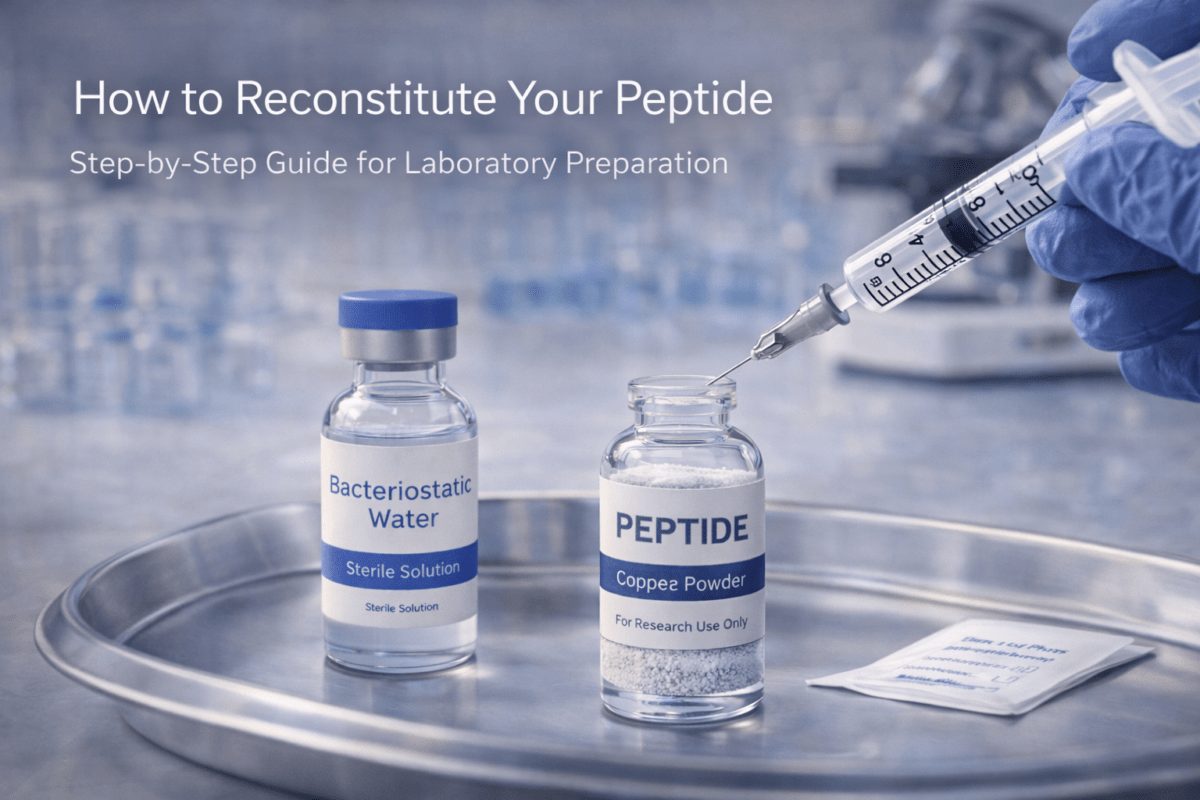
How to Reconstitute Your Peptide for Research
Feb
Lyophilized peptides are commonly used in laboratory environments because freeze-drying allows them to remain stable during storage and shipping. Before a peptide can be used in most research applications, it must first be reconstituted using a sterile solvent.
This process restores the peptide from its dry powdered form into a liquid solution suitable for laboratory handling.
Understanding how to properly reconstitute peptides is important for maintaining accuracy, stability, and experimental reliability.
What Does Reconstitution Mean?
Reconstitution refers to the process of dissolving a lyophilized peptide powder with a sterile solvent in order to create a liquid solution.
Lyophilization, also known as freeze-drying, removes water from the peptide while preserving its molecular structure. This allows peptides to remain stable for longer periods when stored correctly.
When researchers are ready to work with the compound, the peptide is dissolved using a sterile solution such as:
• bacteriostatic water
• sterile water
• buffered laboratory solutions
The chosen solvent depends on the specific research protocol and experimental design.
Materials Needed
Before reconstituting a peptide, researchers should ensure they have the following materials available:
• lyophilized peptide vial
• sterile solvent (commonly bacteriostatic water)
• sterile syringe
• alcohol swabs
• sterile storage vials (if transferring solution)
Maintaining sterile technique during this process helps prevent contamination.
Step-by-Step Reconstitution Process
Step 1: Prepare the Workspace
Work on a clean, sanitized surface. Many laboratories perform peptide preparation in sterile environments to reduce contamination risks.
Clean the top of the peptide vial using an alcohol swab before introducing any solvent.
Step 2: Draw the Sterile Solvent
Using a sterile syringe, draw the desired amount of bacteriostatic water or sterile solvent.
The volume used will determine the final concentration of the peptide solution.
Step 3: Add the Solvent Slowly
Insert the needle into the peptide vial and slowly inject the solvent down the inside wall of the vial rather than directly onto the powder.
This helps prevent agitation that may damage delicate peptide structures.
Step 4: Allow the Peptide to Dissolve
After adding the solvent, allow the peptide to dissolve naturally.
Avoid shaking the vial vigorously. Instead, gently swirl or roll the vial between your fingers if necessary.
Most peptides dissolve within several minutes.
Step 5: Store the Reconstituted Peptide
Once dissolved, the peptide solution should be stored according to appropriate research storage guidelines.
Common storage conditions include:
• refrigerated environments (2–8°C)
• protected from light
• sealed in sterile containers
Proper storage helps maintain peptide stability during research.
Understanding Peptide Concentration
The concentration of the peptide solution depends on two factors:
-
The amount of peptide in the vial
-
The amount of solvent added
For example:
A 10 mg peptide vial combined with 2 mL of solvent results in a concentration of:
5 mg per mL
Researchers often calculate concentration before reconstitution to ensure accurate experimental preparation.
Best Practices for Peptide Stability
To help maintain peptide integrity, researchers often follow several general guidelines:
• avoid excessive agitation
• minimize repeated freeze-thaw cycles
• store peptides at appropriate temperatures
• handle using sterile technique
Maintaining peptide stability is important for producing reliable experimental results.
Why Peptides Are Lyophilized
Freeze-drying peptides offers several advantages for laboratory use.
Lyophilized peptides tend to have:
• longer shelf life
• improved stability during shipping
• reduced degradation risk
• easier long-term storage
These benefits make lyophilization a common preparation method in peptide research.
Research Use Only
All compounds offered by Novatherix Laboratories are intended strictly for laboratory research purposes only and are not approved for human consumption.
Researchers are responsible for ensuring that all experimental work complies with applicable regulations and ethical standards.
