
Research & Education
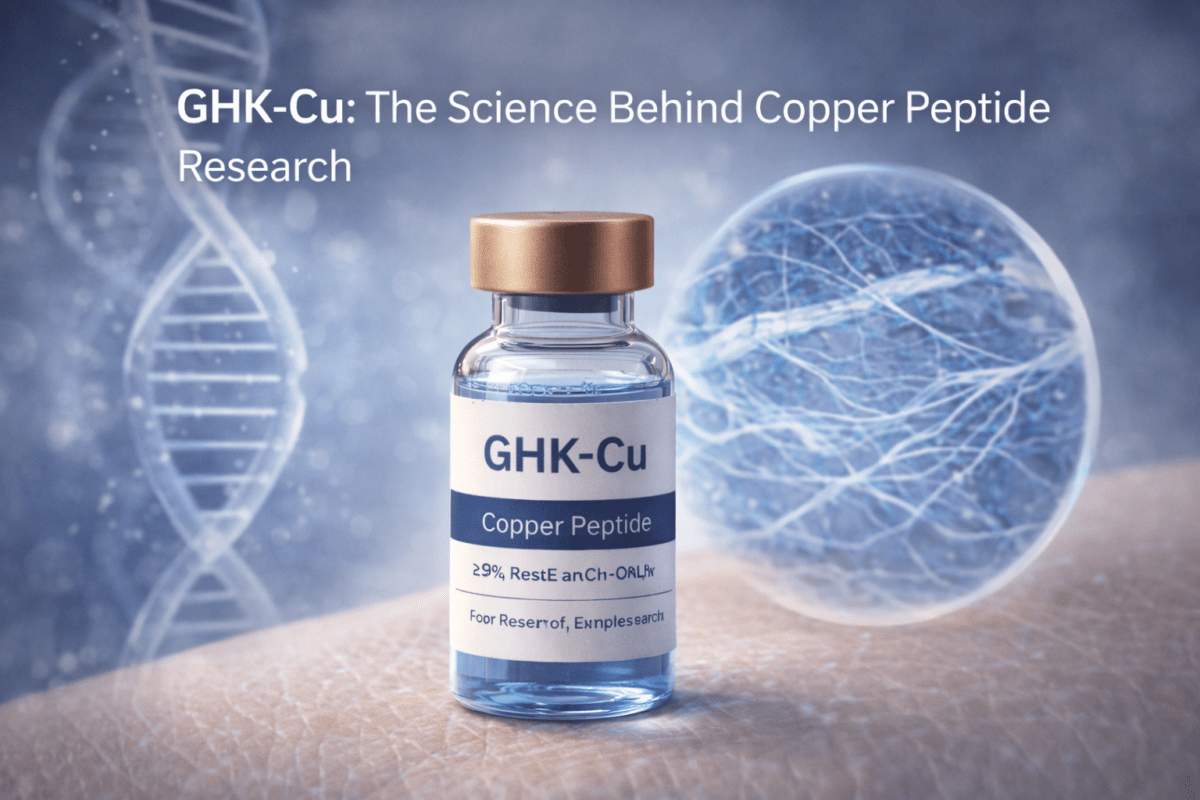
GHK-Cu: The Science Behind Copper Peptide Research
Feb
Peptides have become an important focus of modern biological research due to their role in cellular signaling, tissue repair, and regenerative processes. One peptide that has received significant attention in scientific literature is GHK-Cu, commonly referred to as a copper peptide.
Researchers have studied GHK-Cu for its potential role in cellular repair mechanisms, collagen production, and antioxidant activity. Although much of the research remains experimental, the peptide continues to be widely explored in laboratory environments investigating tissue regeneration and cellular health.
What Is GHK-Cu?
GHK-Cu is a naturally occurring peptide composed of three amino acids:
Glycine – Histidine – Lysine
When this peptide binds with a copper ion, it forms the compound known as GHK-Cu (Copper Tripeptide-1).
This molecule was originally discovered in human plasma and later found in saliva and urine as well. Researchers have noted that levels of this peptide tend to decline with age, which has contributed to scientific interest in understanding its biological role.
Because of its ability to bind copper, GHK-Cu participates in multiple biological processes related to tissue maintenance and cellular communication.
Cellular Regeneration Research
One of the most studied areas involving GHK-Cu is its interaction with cellular regeneration pathways.
In experimental models, researchers have examined how GHK-Cu may influence:
• collagen production
• elastin synthesis
• fibroblast activity
• extracellular matrix remodeling
These processes are essential for maintaining healthy connective tissues and supporting normal cellular repair mechanisms.
Scientists believe copper peptides may help regulate genes associated with tissue regeneration, though the full scope of these interactions continues to be studied.
Antioxidant Activity
Another area of interest involves the antioxidant properties associated with copper peptides.
Oxidative stress occurs when reactive oxygen species accumulate faster than the body can neutralize them. Excess oxidative stress has been linked to cellular damage and aging processes.
Laboratory studies have explored how GHK-Cu may interact with antioxidant pathways that help protect cells from oxidative damage.
Understanding how peptides influence these systems may help researchers better understand cellular resilience and repair.
Skin and Tissue Research
GHK-Cu has also become a widely studied peptide in research involving skin biology and connective tissue repair.
Experimental models have investigated how copper peptides interact with:
• collagen formation
• wound healing responses
• dermal tissue regeneration
• extracellular matrix repair
Researchers believe these processes may be connected to the peptide’s influence on growth factors and cellular signaling pathways.
Gene Regulation Studies
One of the more intriguing aspects of GHK-Cu research involves its potential influence on gene expression.
Some experimental studies suggest that copper peptides may activate or suppress specific genes associated with repair mechanisms and inflammation control.
This ability to influence gene signaling pathways has made GHK-Cu a subject of interest in broader research involving aging biology and regenerative medicine.
Why Copper Peptides Are Studied
Peptides like GHK-Cu are important because they serve as biological messengers that help regulate communication between cells.
Their relatively small molecular structure allows them to interact with receptors and cellular pathways in highly targeted ways.
Because copper plays an essential role in enzymatic processes and tissue repair, scientists continue to investigate how copper peptides contribute to these systems.
The Importance of Research Purity
Reliable peptide research requires compounds that meet strict quality standards.
At Novatherix Laboratories, peptides are verified using analytical methods such as:
• High Performance Liquid Chromatography (HPLC)
• Mass Spectrometry
These techniques help confirm peptide identity, purity, and structural integrity so researchers can work with materials that meet consistent specifications.
Ongoing Research
GHK-Cu continues to be explored in laboratories studying regenerative biology, cellular signaling, and oxidative stress mechanisms.
As peptide science advances, researchers will continue investigating how compounds like copper peptides interact with complex biological systems.
Understanding these pathways may provide valuable insights into cellular repair and tissue regeneration.
Research Use Only
All compounds offered by Novatherix Laboratories are intended strictly for laboratory research purposes only and are not approved for human consumption.
Researchers are responsible for ensuring their work complies with applicable regulations and ethical research standards.
